Some SaaSpocalypse Maths
Pete Harvey
Every founder I know is being asked the same question by their investors: “what stops a customer spending a weekend vibecoding their own version of your product?”.
It’s already happening. I know more than one UK SME leader that has already replaced expensive SaaS tools with a custom solution built using Replit or Lovable. The SaaSpocalypse has arrived.
The build cost for custom software is collapsing. But that’s not the only number that matters.
How much a custom solution costs to maintain determines whether it’s worth building or not.
Let’s look at some numbers. The chart below shows what a typical SaaS subscription costs a business over time.
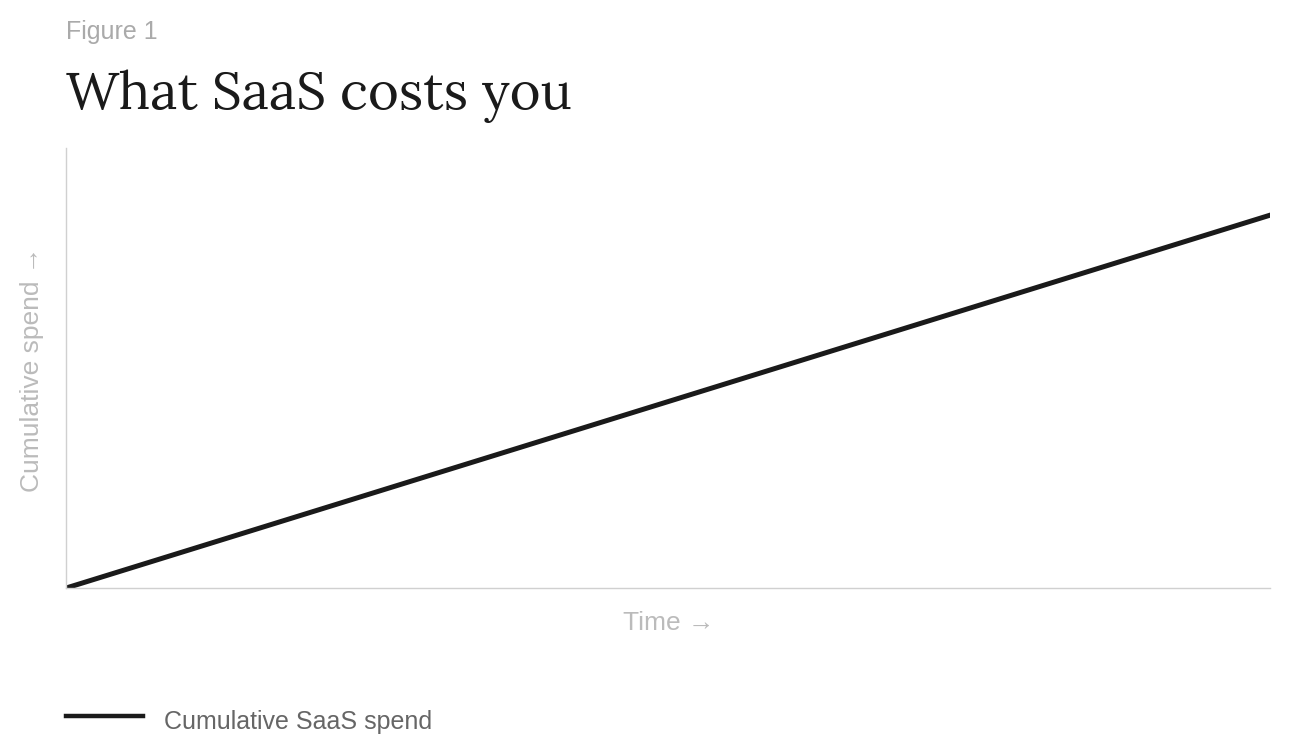
It’s linear because the SaaS company charges their customers a fixed monthly cost for accessing their software.
Custom software has a different profile. It has an upfront build cost, an upfront implementation cost, and then an ongoing maintenance and hosting cost. Custom solutions that win are solutions where the ongoing monthly cost is lower than an equivalent SaaS product’s monthly fees.
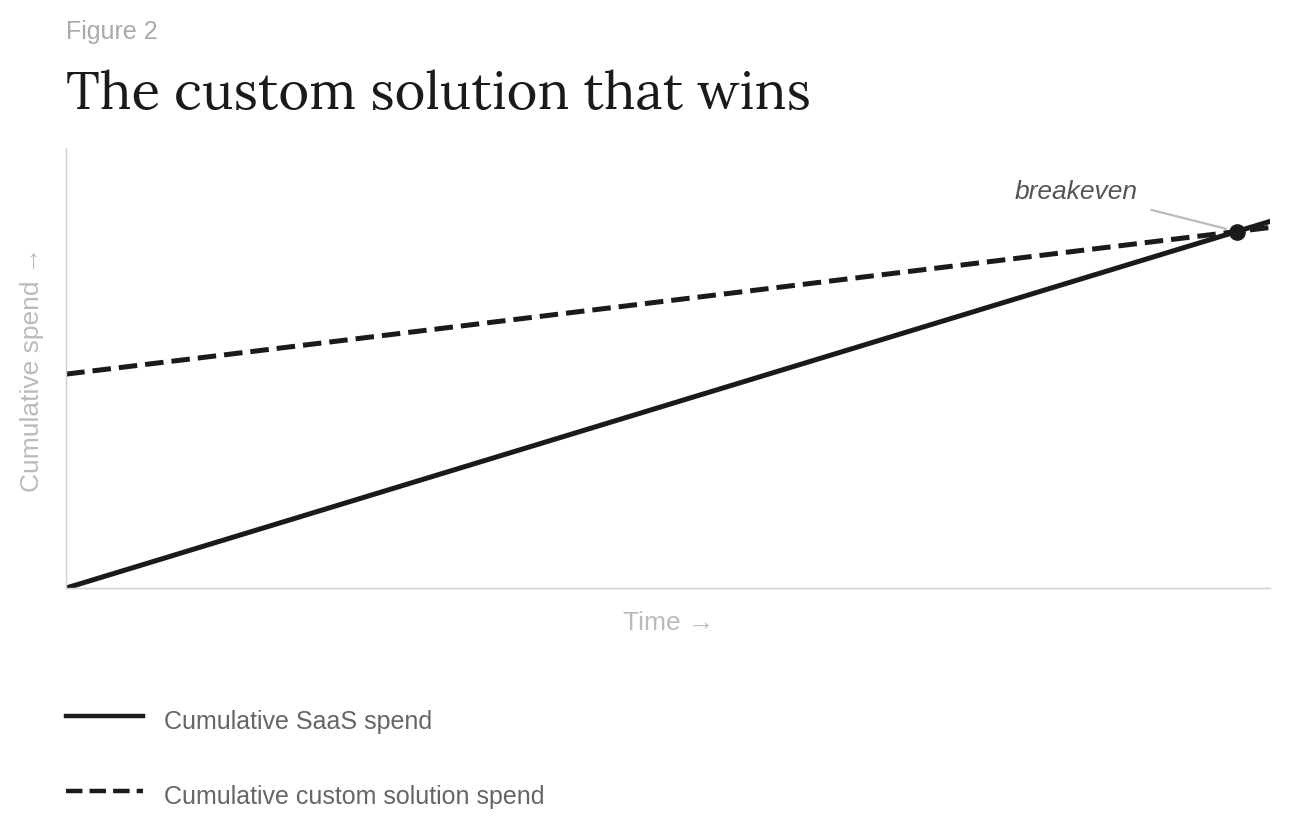
Here’s the whole decision in one formula:
For simplicity, I assume implementation cost is a one-time fixed cost, like the build itself.
If the monthly maintenance cost is greater than or equal to the monthly SaaS fee, the denominator is zero or negative, and breakeven never happens.
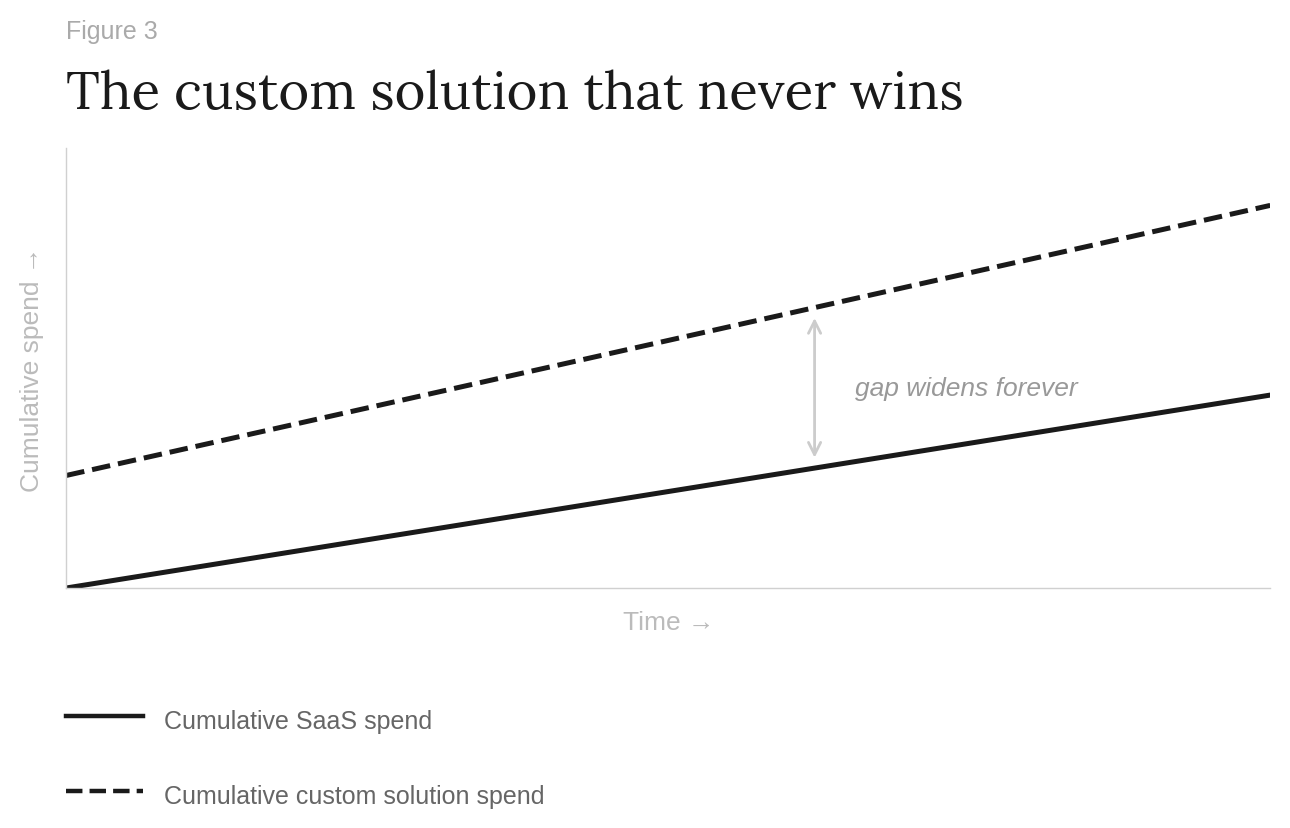
Company size has an impact on the maintenance cost of custom software.
Enterprises can absorb maintenance. They already have engineers, infra, security review, monitoring. The marginal cost of ‘one more internal tool’ is low (although you might get a different answer from the CTO who is already managing a suite of immortal “prototypes”).
The SME market is different.
Maintenance means contractors. A vibe-coded ERP replacement could cost £2,000 to build and looks like a win — until the first security patch, the first integration break, the first time it doesn’t scale properly. What started as a SaaS killer becomes a liability and another task on the founder’s todo list.
This is why I believe that SaaS built for SMEs has a more durable business model than the current SaaSpocalypse narrative suggests. The threat is real, but it’s most acute where maintenance is already ‘free’ (i.e., absorbed by an internal engineering org) — typically enterprise. The products at risk are those with standard infrastructure, limited workflow complexity, and no meaningful data layer. If your product can be rebuilt in a week, your customers already know it.
But what happens when maintenance gets automated?
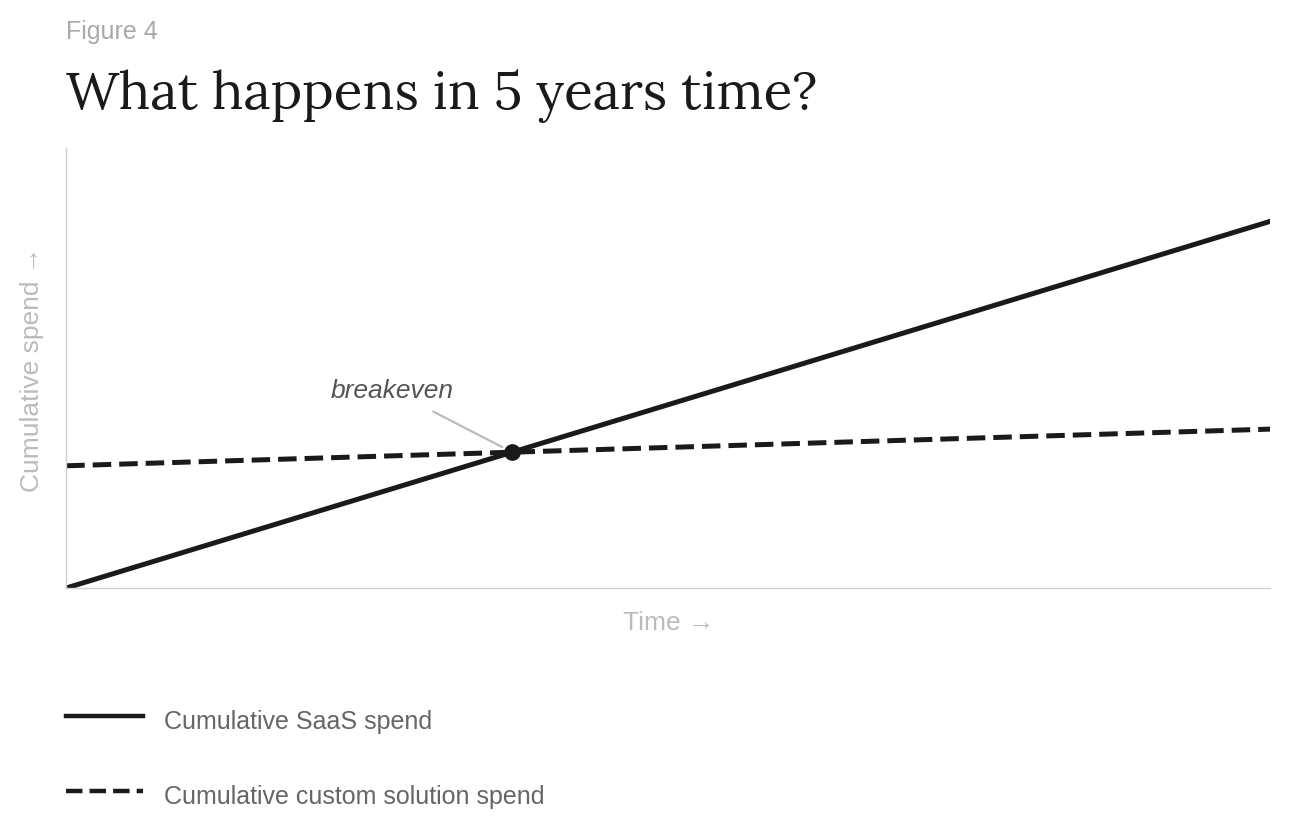
If LLMs continue to collapse build costs and maintenance becomes increasingly automated, the numbers change. Then the only thing that will matter is how much it will cost to build and implement a custom solution.
Data infrastructure is a good example of a defensible space in this world. A custom dashboard is easy to build. A custom data warehouse — with a semantic layer, connectors to a dozen source systems, transformation logic, access controls, audit trails, and security compliance — is not.
But build complexity is only part of it. The real value is what data infrastructure accumulates: a working model of your business, encoded in your metrics, your entities, your logic. A contractor rebuilding from scratch doesn’t just face an engineering problem. They face a knowledge problem, and reimplementing accumulated knowledge in a new data infrastructure system is a months-long job.
SaaS founders serving SMEs should ask one question: if a contractor tried to rebuild what we do in three months, what would they get wrong? If the answer is “not much,” that’s a real problem. If the answer is “almost everything that matters,” you’re probably fine.
Cheap to build doesn’t always mean easy to replace.